How to Get Your First Job in Tech: Build Proof, Not Just a CV
A practical entry strategy built around public work, real projects, thoughtful applications, networking and learning from rejection.

1. Build a portfolio with three strong projects, not fifteen weak ones
| Project type | What it proves |
|---|---|
| CRUD product | Forms, state, backend, database |
| Real-world local problem | Product thinking and context |
| Technical depth project | Architecture, offline, performance, testing |
2. Every portfolio project needs a story
- ✓Problem: who needed what?
- ✓Your role: what exactly did you build?
- ✓Architecture: frontend, backend, database, deployment.
- ✓Hardest bug: what failed and how did you diagnose it?
- ✓Trade-off: what did you intentionally not build?
- ✓Result: what works today?
- ✓Next step: what would you improve with more time?
3. Example README structure
# Campus Market

A small marketplace for students to list useful items.

## Problem
Students rely on scattered WhatsApp posts to find second-hand items.

## Stack
React, Express, PostgreSQL

## Features
- Product listing
- Search
- Seller account
- Mobile responsive UI

## Architecture
Explain the request flow and database model.

## What I learned
Describe one important technical lesson.

## Run locally
Document the exact commands.
4. Your CV should be scannable
| Weak | Stronger |
|---|---|
| “Worked on websites” | “Built and deployed a React directory with search and authenticated CRUD” |
| Long skill list | Skills demonstrated by projects |
| Generic objective | One-line role target + useful specialisation |
| No links | GitHub + live demo + portfolio |
5. Apply with context
Read the company’s product and role. Mention one concrete connection between their work and something you have built. A short specific application is usually more credible than a long generic message sent everywhere.
6. Networking without begging
- 1Follow the work
Read what the person or company actually builds.
- 2Ask a precise question
Avoid “Please mentor me.” Ask about one technical or career decision.
- 3Share progress
A small shipped project gives people something real to react to.
- 4Help first when possible
Documentation, testing, community answers or event support can create genuine relationships.
7. Interview preparation
- ✓Explain one project from problem to deployment.
- ✓Practise debugging aloud.
- ✓Know basic data structures for the role.
- ✓Prepare examples of teamwork and mistakes.
- ✓Research the company.
- ✓Prepare questions about onboarding, feedback and expectations.
8. Rejection becomes data only if you record it
| Track | Why |
|---|---|
| Role / company | See which roles you are targeting |
| Date | Know when to follow up |
| Stage reached | Find where the funnel breaks |
| Feedback | Detect recurring skill gaps |
| Portfolio used | Test which evidence works |
Useful career resources
Sources and further reading
Clarvo articles are independently written. These references let you inspect the original inspiration and primary or official sources used to deepen the guide.
You can also read
 Clarvo & PrivacyHow to Delete Your Clarvo Account — What Happens, What You Lose, and What to Check First11 min read →
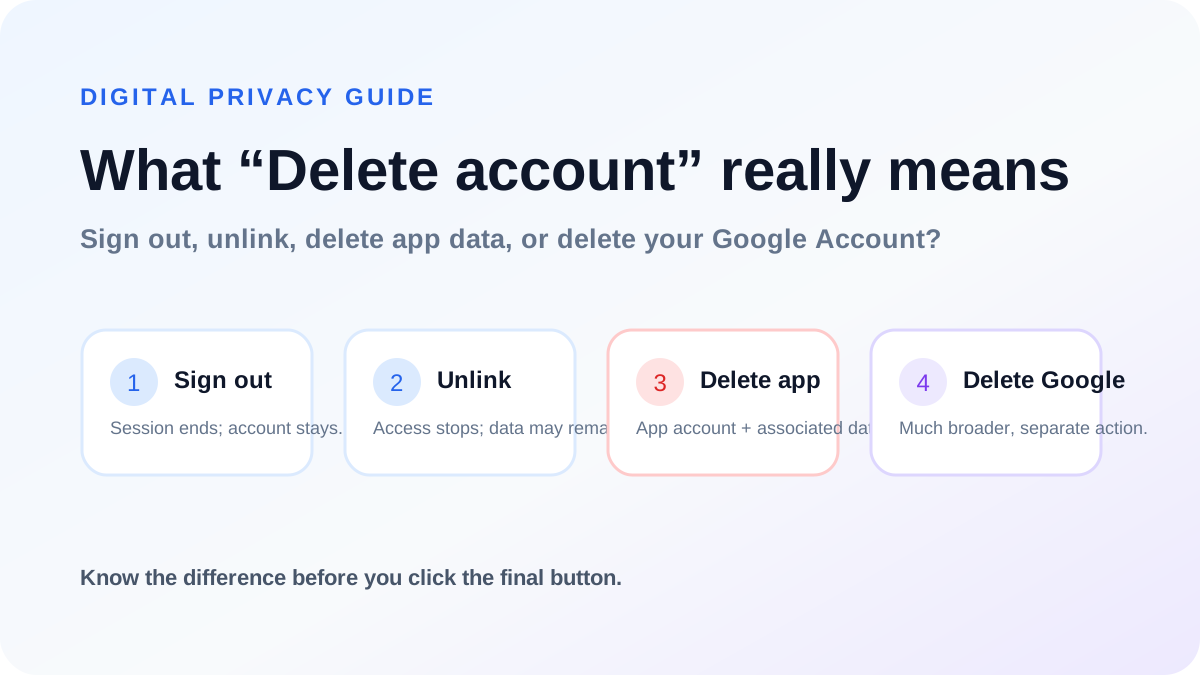 Digital PrivacyDeleting an Online Account Safely: Sign Out vs Unlink vs Delete12 min read →
 Web DevelopmentGetting Started with Next.js: A Beginner-Friendly App Router Guide14 min read →
 Web DevelopmentMaster React Step by Step: From Components to Hooks and Real Projects13 min read →