How to Choose a Career Path by Experimenting Before You Commit
Turn career uncertainty into a sequence of small experiments: self-reflection, role research, skill trials, conversations, projects and decision checkpoints.

1. Write three career hypotheses
Example: “I might enjoy backend development because I like logic and APIs,” “I might enjoy product design because I like visual problem-solving,” and “I might enjoy health informatics because I want technology connected to healthcare.”
2. Define what would count as evidence
| Hypothesis | Test | Evidence |
|---|---|---|
| Backend | Build a small API | Did debugging and data modelling hold your interest? |
| Design | Redesign one real flow | Did user research and iteration feel meaningful? |
| Health informatics | Interview practitioner + analyse workflow | Did the domain problems motivate you? |
3. Research before paying for a long course
- ✓Read 10 real job descriptions.
- ✓List recurring skills.
- ✓Check required qualifications in your country.
- ✓Speak to at least two practitioners.
- ✓Complete one realistic task.
- ✓Estimate time/cost to become employable.
4. The information interview
Ask: What did you misunderstand about this career before you entered it? What does a junior actually do? Which skill is hardest to learn from courses? What makes people leave?
5. Decide with trade-offs visible
No career wins every criterion. A field can pay well but require training you cannot currently afford; another can fit your values but offer fewer local openings. Writing the trade-offs prevents one attractive feature from hiding the full decision.
6. Your 30-day experiment template
- 1Week 1
Research roles and choose one skill to test.
- 2Week 2
Complete a short practical task.
- 3Week 3
Speak to practitioners and compare your assumptions.
- 4Week 4
Write a one-page decision memo: continue, pause or pivot.
Original source
Sources and further reading
Clarvo articles are independently written. These references let you inspect the original inspiration and primary or official sources used to deepen the guide.
You can also read
 Clarvo & PrivacyHow to Delete Your Clarvo Account — What Happens, What You Lose, and What to Check First11 min read →
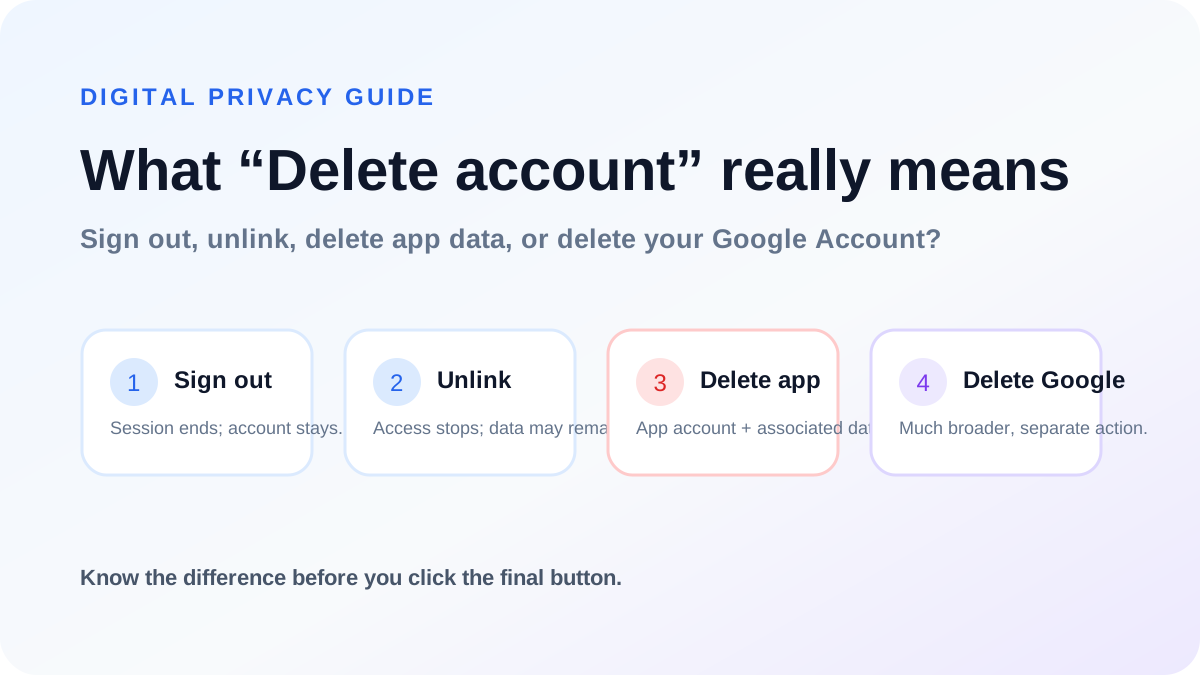 Digital PrivacyDeleting an Online Account Safely: Sign Out vs Unlink vs Delete12 min read →
 Web DevelopmentGetting Started with Next.js: A Beginner-Friendly App Router Guide14 min read →